Channel Letters vs. Cabinet Signs: A Sign Shop Guide to Recommending the Right Product

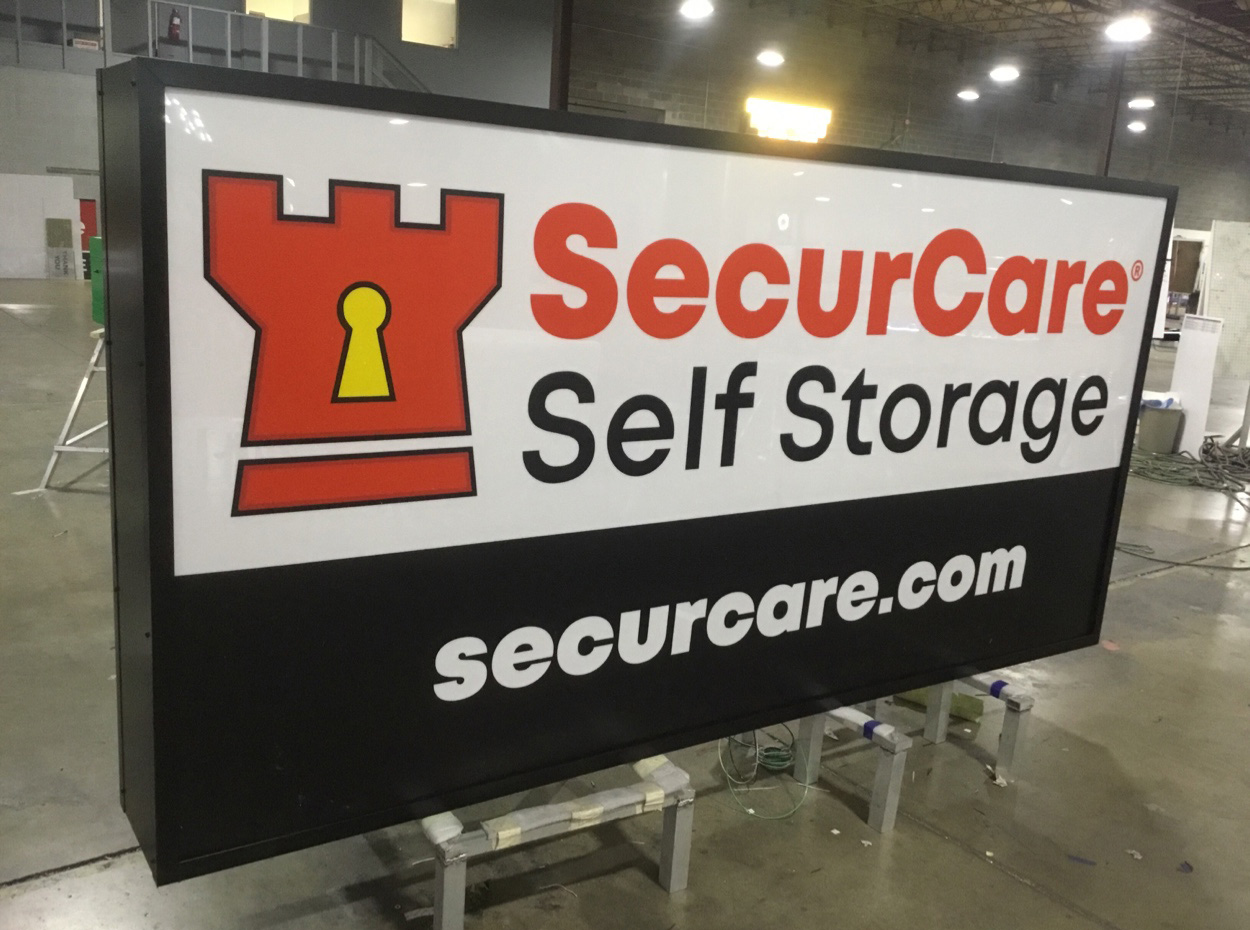
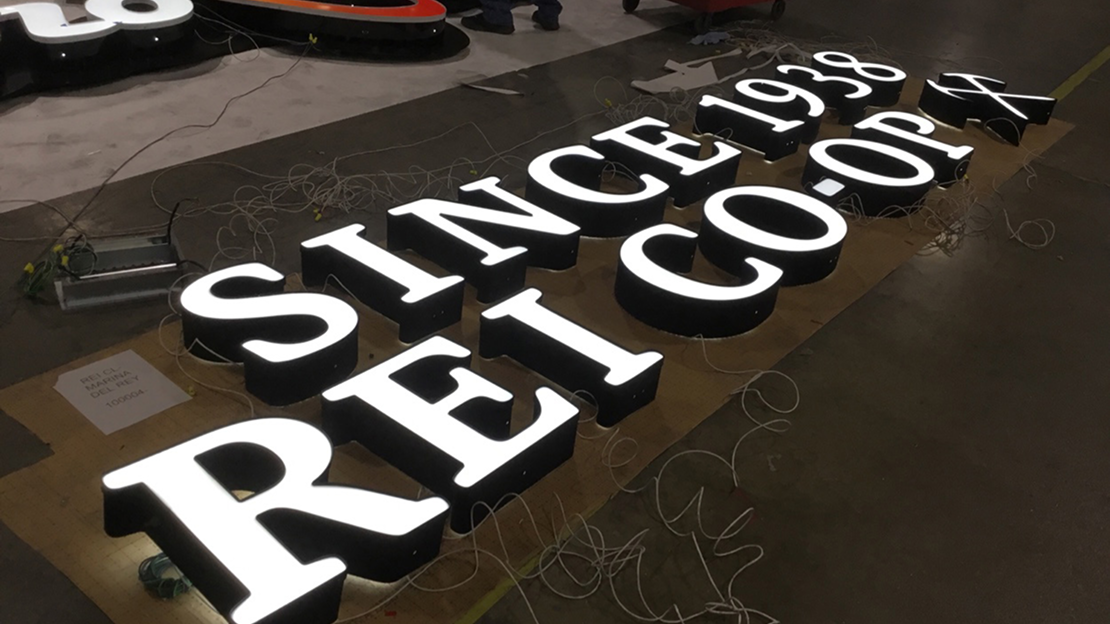
A cabinet sign puts the sign face and illumination inside a single enclosed cabinet. Channel letters are individually fabricated letters or shapes, typically illuminated with LEDs and installed directly to a building or mounted to a raceway.

For sign shops, the practical difference between a cabinet sign and channel letters comes down to the customer’s design, viewing distance, building conditions, budget, and installation requirements. Cabinet signs can put a large amount of information into one highly visible sign structure. Channel letter signage creates an individual-letter appearance that works well when the building itself needs to carry the brand.

Neither product fits every job. Awning Innovations manufactures both, so our team looks at what your customer actually wants and needs rather than trying to force every set of specs into the same fabrication method. We offer four types of sign cabinets as well as five channel letter styles and custom fabrication options.

Channel Letters vs. Cabinet Signs at a Glance

There’s a lot to consider when helping your customer choose the right sign type to represent their business. A lot of those factors center around the fabrication and installation of the sign itself. Here are some key factors:

Consideration Channel Letters Cabinet Signs
Construction Individually fabricated letters or shapes Enclosed cabinet with a decorated sign face 
Appearance Individual dimensional characters One unified sign area 
Visibility Strong building identification and brand visibility Strong option for roadside and distance viewing
Design Best suited to individual letters, logos, and dimensional brand elements Accommodates logos, lettering, graphics, and other information on one face 
Installation Individual letters or a raceway-mounted assembly must be positioned on the building Cabinet is installed as a complete sign assembly 
Individual letters have separate fabricated and electrical components  Components are housed within the cabinet 
Common Applications Storefronts, building elevations, retail centers, branded exterior signage Building signs, pole signs, pylon applications, roadside identification 


Project specifications can change the cost, installation requirements, and service needs of either option.

How Are Channel Letters Engineered?

Channel letters take a different approach. Each letter, number, logo element, or shape is fabricated as an individual dimensional component. Illumination and mounting specifications are then engineered around the selected letter style and project conditions.

Awning Innovations offers five channel letter styles, with options for customized depth, illumination, and mounting structure. That flexibility allows a sign shop to match the sign more closely to a customer’s brand standards and building architecture.

Engineering matters here. Letter dimensions, mounting method, electrical requirements, illumination, and building conditions all have to work together before fabrication begins.

Awning Innovations creates blueprints for its projects and uses engineered CAD drawings for approval before building to the approved design. Those records also provide useful project information if maintenance or repairs come up years later.

Explore Custom Channel Letters

How Is a Cabinet Sign Built?

A sign cabinet is an enclosed sign structure designed to support and display one or more sign faces. Instead of fabricating every letter as its own dimensional component, the messaging and graphics appear on the cabinet face.

Awning Innovations offers four types of sign cabinets along with fully custom fabrication. Depending on the project, the cabinet provides the structure needed to combine branding, messaging, and illumination into a single sign.

That construction makes cabinets particularly useful when a customer needs a larger visual field. A roadside business, for example, may need its name, logo, and supporting information readable by drivers approaching from a distance. A cabinet gives the sign shop room to work with that information without turning every design element into an individual fabricated letter.

Cabinets can also make sense when existing architecture or mounting conditions favor a contained sign assembly.

Explore Custom Sign Cabinets

Which Option Costs Less: Channel Letters or Cabinet Signs?

There isn’t a universal rule for cabinet-versus-channel-letter pricing, especially when you outsource the project to a wholesale sign fabricator like Awning Innovations. Sign size, materials, illumination, graphics, mounting requirements, electrical work, quantity, and fabrication complexity can all move the final number.

Installation conditions matter, too. A seemingly straightforward sign can become a more involved project once access, mounting surfaces, electrical connections, or structural requirements enter the picture.

Cabinet signs can be a practical choice when the customer needs a substantial illuminated sign area without individually fabricated characters. Channel letters can require more individual fabrication because each character or logo component is built separately.

For sign shops, quoting the actual specifications is more useful than promising that one product category will always be cheaper.

Which Sign Type Offers Better Visibility?

Choosing a sign starts with knowing where people will see it. Cabinet signs are well suited to applications where drivers or pedestrians need to process a larger sign face at a distance. They can support a combination of logos, text, graphics, and other information inside one defined visual area. That can make a cabinet a strong recommendation for roadside properties and freestanding sign structures.

Channel letters work particularly well when the building is the primary identification point. Individual illuminated letters create dimensional separation between the sign and the architecture, making them a common fit for storefronts and branded commercial buildings.

Viewing distance, traffic direction, elevation, surrounding signs, and available mounting area should all factor into the recommendation you give your customer.

How Does Installation Differ Between a Sign’s Face Type?

Cabinet signs and channel letters arrive at installation with different requirements.

A cabinet is a unified assembly. The installer needs an appropriate mounting structure, electrical connection when illuminated, and adequate support for the cabinet’s dimensions and weight.

Channel letters may be installed individually or mounted using another structure, such as a raceway. Individual mounting can require more layout work in the field because letter spacing and alignment have to match the approved design.

Building conditions can settle the decision quickly. Limited mounting space, architectural features, landlord requirements, existing electrical access, or restrictions on penetrations may make one construction method more practical than the other.

Awning Innovations takes customer specifications and turns them into production-ready blueprints, with project details reviewed before fabrication.

What Should Sign Shops Consider About Maintenance?

Serviceability should be part of the product recommendation, especially for illuminated signage.

With a cabinet, lighting and other internal components are contained inside the sign structure. Channel letters distribute components across individual characters or assemblies. The exact maintenance process depends on the sign design, mounting method, illumination system, and access at the installation site.

Documentation becomes particularly useful after the sign has been in service for several years. Awning Innovations maintains blueprints for its projects, giving the team a reference point when future repairs or replacement components are needed.

When Should You Recommend Channel Letters?

Channel letters are usually the stronger recommendation when individual dimensional characters are central to the design. Consider them when:

  • Brand standards call for individual letters or logo elements.
  • The sign needs to integrate closely with the building architecture.
  • A storefront needs prominent illuminated identification.
  • Dimensional depth is an important part of the intended appearance.
  • The project calls for a particular illumination or mounting style available through channel letter construction.

Channel letters are one of the most common commercial signage formats, and their customization options give sign shops substantial control over the finished appearance.

When Should You Recommend a Cabinet Sign?

Recommend a cabinet sign when the project benefits from a unified sign face, especially when:

  • The sign needs to communicate several visual elements in one area.
  • Roadside or long-distance visibility is a priority.
  • The customer needs an illuminated freestanding or building-mounted sign.
  • The architecture works better with a contained sign assembly.
  • The design does not require individually fabricated dimensional letters.
  • Project specifications or budget make individual letter fabrication less practical.

Cabinets remain a straightforward solution for many traditional commercial sign applications. They also leave room for customization when a standard configuration will not meet the specifications.

What If Your Shop Can Sell the Job But Can’t Build It?

Knowing which product to recommend and having the capacity to fabricate it are two different problems.

A cabinet order may exceed your equipment or floor-space capabilities. A large channel letter package can hit when your production schedule is already full. A specialty configuration may require fabrication experience your team does not use often enough to maintain in-house.

Turning down the order costs more than one job. It can send a customer looking for another sign company that can handle a broader range of work.

Awning Innovations works behind the scenes for sign companies that need additional manufacturing capacity or specialty fabrication capabilities. The company’s role is to design, engineer, fabricate, and deliver the signage while the sign shop maintains its customer relationship. You build the relationship. We’ll build the sign.

Build the Sign the Specs Call For with Awning Innovations

Your customer doesn’t need to know that the job stretches your current production capacity. They need the right sign delivered to spec.

Awning Innovations has spent more than 25 years helping sign professionals take on custom and overflow work. Our wholesale-only team manufactures sign cabinets, channel letters, and other custom signage for sign companies nationwide.

When the next order requires equipment, manpower, or fabrication expertise you’d rather not add in-house, send us the specs. And we’ll deliver a sign up to your standards.

Request a Quote

Channel Letters vs. Cabinet Signs FAQ

Are Cabinet Signs Cheaper Than Channel Letters?

Cabinet signs can cost less than channel letters on some projects, but there is no blanket rule. Size, materials, illumination, graphics, mounting, quantity, and installation requirements affect pricing. Channel letters require individual fabrication of letters or shapes, while a cabinet concentrates the sign structure and graphics into one assembly.

Get both options quoted against the actual specifications when budget is driving the decision.

Which Lasts Longer: Channel Letters or Cabinet Signs?

Both cabinet signs and channel letters can provide long service lives when they are properly engineered, fabricated, installed, and maintained. Material specifications, illumination components, weather exposure, installation quality, and maintenance can all influence service life.

The better question is which construction method fits the site and how accessible its components will be for future service.

When Should a Sign Shop Recommend Channel Letters Over a Cabinet Sign?

Recommend channel letters when individual dimensional characters, building integration, or a particular illuminated-letter appearance is central to the design. Site conditions and customer specifications should make the final call.

Recommend a cabinet sign when the customer needs a unified sign face, strong roadside visibility, room for multiple graphic elements, or a sign configuration better suited to an enclosed assembly.
Illuminated Cabinet Signs: What Sign Companies Need to Know to Sell and Source Them

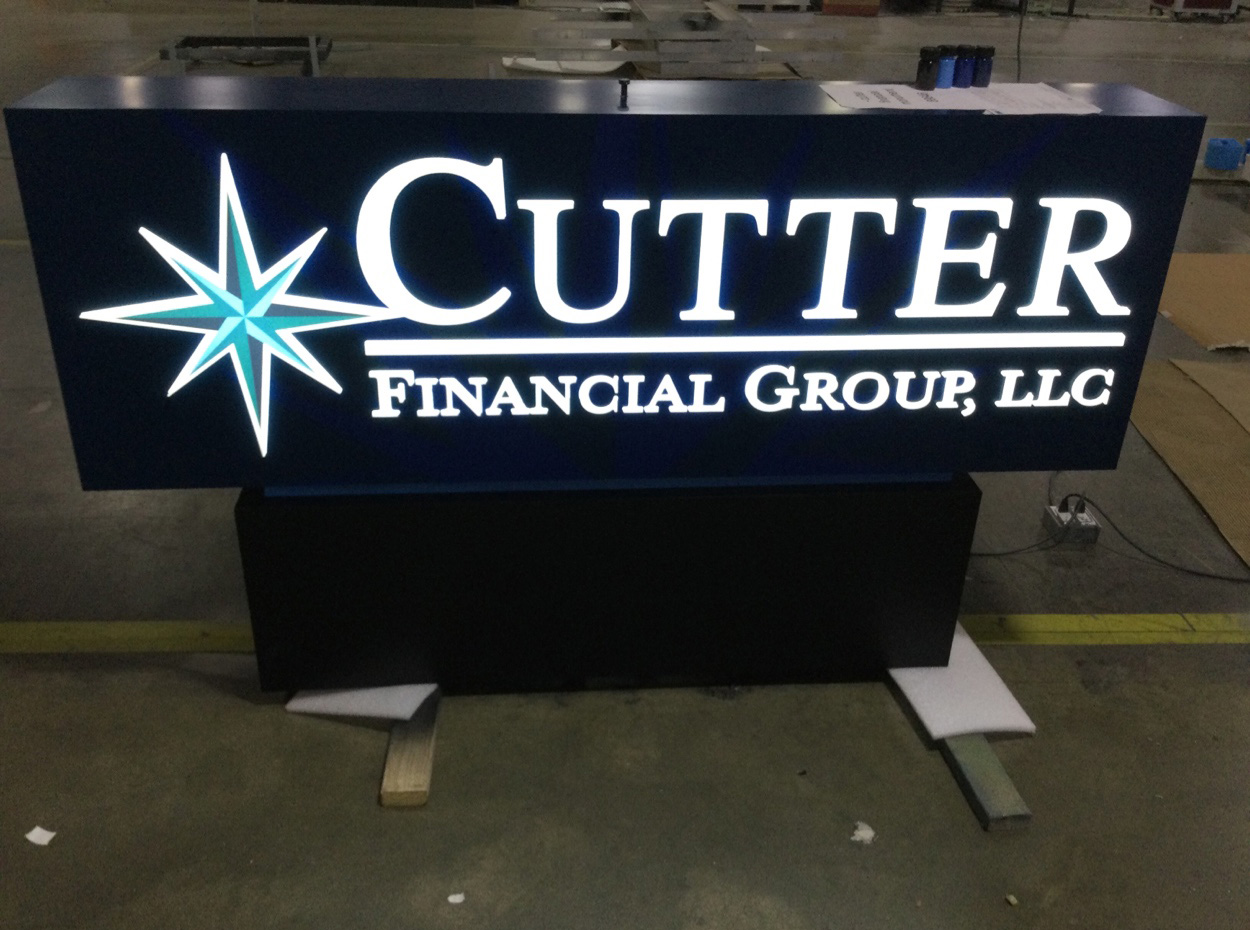
An illuminated cabinet sign, sometimes called a lighted sign cabinet, is an enclosed sign structure with a translucent face and an internal light source that makes the graphics visible after dark. The cabinet provides the structural enclosure, the face carries the customer’s branding or message, and the lighting system illuminates the face for consistent visibility.

For sign companies, selling the right cabinet means looking beyond dimensions and artwork; fabrication and sourcing matter just as much. When you outsource an illuminated cabinet sign, you need a fabricator that understands how those details work together and can build to the approved specifications.

Awning Innovations manufactures custom sign cabinets for sign companies nationwide. As a wholesale-only manufacturer, we work behind the scenes to provide the engineering and fabrication capacity sign shops need for specialty and overflow orders.

What Goes Into an Illuminated Sign Cabinet?

A lighted sign cabinet may look simple once it is installed, but there is more happening behind the face.

A typical illuminated cabinet incorporates a fabricated metal enclosure, one or more sign faces, an internal illumination system, electrical components, and the hardware required for the intended mounting method. Aluminum is commonly used for cabinet construction, including extruded aluminum framing. Depending on the design, translucent faces may be fabricated from acrylic or polycarbonate, allowing the internal light source to illuminate the graphics.

LEDs are commonly used as the internal light source in current cabinet fabrication. Proper LED placement matters because the face needs consistent illumination rather than bright and dark areas across the display.

The exact materials, dimensions, electrical layout, and structural details depend on the specifications for the job. Custom fabrication becomes particularly important when a cabinet has unusual dimensions, mounting conditions, graphics, or architectural requirements.

Awning Innovations offers four types of sign cabinets along with fully custom cabinet fabrication.

Explore Custom Sign Cabinets

How Are Cabinet Signs Illuminated?

Not every lighted sign cabinet uses light in exactly the same way. Sign companies should understand the lighting approach before quoting or sourcing a project.

  • Internally Illuminated: A light source sits inside the cabinet and shines through a translucent face. Internal illumination is a common configuration for cabinets that need strong nighttime visibility.
  • Externally Illuminated: The cabinet face is illuminated by fixtures positioned outside the sign rather than lighting housed inside the cabinet. This changes the electrical, mounting, and visual requirements of the project.
  • LED Backlit Face: LEDs installed within the cabinet illuminate a translucent acrylic or polycarbonate face from behind. LED placement, cabinet depth, face material, and graphic construction need to work together to produce even illumination.

The drawings and specifications should identify the required lighting method before production starts. Making that decision at the fabrication stage is much easier than trying to solve uneven lighting or incompatible components after installation.

What Should Sign Companies Know Before Selling an Illuminated Cabinet?

The end customer may start with a simple request: “We need a lighted sign.”

Your team has to turn that request into something that can actually be engineered, manufactured, installed, and serviced. Several project details deserve attention early.

Size And Viewing Distance

Start with where the sign will be installed and how customers will approach it.

A roadside cabinet designed for drivers traveling at speed has different visibility requirements than a building-mounted cabinet viewed from a parking lot. Dimensions, copy size, graphics, placement, and surrounding visual competition all affect readability.

A bigger face doesn’t automatically solve a visibility problem. The information on it still has to work at the expected viewing distance.

Face Material And Graphics

The sign face does more than carry artwork. Its material and construction affect illumination, durability, and fabrication.

Acrylic and polycarbonate are common translucent face materials for illuminated applications. The appropriate material and thickness depend on factors such as cabinet size, face construction, project specifications, and environmental exposure.

Graphics also need to account for illumination. Colors and materials that look one way during the day can behave differently when lit from behind.

Cabinet Depth

Cabinet depth affects more than the profile of the finished sign. An internally illuminated cabinet needs enough space for its structural and electrical components while allowing the lighting system to illuminate the face effectively.

Depth can also be constrained by architecture or installation requirements. Get those restrictions into the specifications before fabrication rather than treating cabinet depth as a standard number.

Mounting Conditions

Know where the cabinet is going before you order it. A wall-mounted cabinet, freestanding application, or cabinet incorporated into another sign structure can require different engineering and attachment details. Building materials, available mounting points, electrical access, weight, and local requirements may affect the final design.

Accurate field information gives the fabricator something reliable to engineer around.

Service Access

Illuminated signs eventually need service. A cabinet should account for access to lighting and electrical components without creating unnecessary work for the technician. Installation location matters here, too. A component that is simple to reach on the shop floor may be much less convenient several feet above the ground.

Thinking about service during design can save your team trouble later.

Why UL Certification Matters For Illuminated Cabinet Signs

Electrical signage brings requirements that a non-illuminated sign does not.

Awning Innovations is UL certified, an important consideration when sign companies outsource illuminated sign fabrication. For cabinet projects that require a UL-listed sign, fabrication needs to follow the applicable requirements so the completed electrical sign can carry the appropriate UL marking.

Don’t treat the electrical system as an add-on after the cabinet has already been designed. Illumination components, wiring, power supplies, component placement, and access all need to be addressed as part of the production plan.

For a sign company outsourcing fabrication, confirming UL capabilities with the manufacturer early can prevent a problem much later in the project.

Why Engineered Drawings Matter Before Fabrication

Artwork tells a fabricator what the customer wants the sign to look like. Production drawings tell the shop how it will actually be built.

Awning Innovations uses engineered CAD drawings and blueprints as part of its production process. The team reviews the project details, develops production-ready drawings, and builds according to the approved design.

For an illuminated cabinet sign, those drawings can document the details that need to remain consistent as a project moves into production. They also leave a record behind for repairs and replacements needed in the future.

What Should You Send a Cabinet Sign Fabricator?

A better quote starts with better information.

Before sending an illuminated cabinet project out for pricing, gather as much of the following as the project allows:

  • Overall cabinet dimensions
  • Artwork and branding specifications
  • Desired face construction
  • Illumination requirements
  • Mounting method
  • Installation location
  • Available electrical information
  • Relevant field measurements
  • Quantity
  • Required completion date
  • Any permitting or engineering requirements already identified

Some projects will arrive with every detail settled by the customer. Others won’t. Awning Innovations’ process is built around reviewing specifications and translating them into production-ready blueprints rather than relying on a piece-by-piece approach.

When Does Outsourcing Cabinet Sign Fabrication Make Sense?

Your shop doesn’t have to lack cabinet fabrication experience to benefit from outsourcing.

Capacity is often the bigger issue. A large illuminated cabinet can occupy valuable floor space and production time. A multi-location order can consume capacity your team already committed elsewhere. Other projects may call for equipment, engineering, or electrical fabrication capabilities that don’t make sense for your business to maintain for occasional orders.

Those jobs don’t have to become jobs you turn down. Awning Innovations works as an extension of sign companies that need additional capacity or fabrication capabilities. Our wholesale-only model means we’re manufacturing for sign professionals, not competing with them for their end customers.

That can be especially useful when your sales pipeline is moving faster than your production floor.

Source Your Next Cabinet Sign From Awning Innovations

Selling an illuminated cabinet is one part of the job. Getting the engineering, construction, illumination, and schedule right is where your fabrication partner earns its place.

Awning Innovations has spent more than 25 years helping sign companies expand what they can offer without adding the corresponding production burden. We manufacture custom signage for sign professionals nationwide, including sign cabinets and illuminated exterior signage.

Send us the project specifications. We’ll help you get it built.

Request a Quote

Illuminated Cabinet Signs FAQs

What Is The Difference Between An Illuminated Cabinet Sign And A Channel Letter Sign?

An illuminated cabinet sign contains the sign face and lighting within a larger enclosed structure. Channel letters are fabricated as individual dimensional letters, numbers, or logo elements, with each component forming part of the finished sign.

Cabinets provide a unified area for graphics and messaging, making them useful for many building-mounted and roadside applications. Channel letters create individually defined dimensional characters and are common on storefronts and commercial building elevations.

Awning Innovations fabricates both sign cabinets and channel letters, allowing sign companies to source the construction method that fits the project instead of working around a manufacturer limited to one product type.

How Are Illuminated Cabinet Signs Lit?

Illuminated cabinet signs are commonly lit internally, with LEDs positioned inside the cabinet to shine through a translucent sign face. LED layout, cabinet depth, face material, graphics, and electrical design all affect the finished illumination.

Some cabinet signs can also use external lighting rather than an internal light source. The project specifications should identify the intended lighting method before fabrication.

Are Illuminated Cabinet Signs UL Listed?

Illuminated cabinet signs can be UL listed when they are manufactured under the appropriate UL program and meet the applicable requirements. A sign should not be assumed to be UL listed simply because it is illuminated.

Awning Innovations is a UL-certified sign manufacturer, giving sign companies a wholesale fabrication resource for projects that require UL-listed electrical signage.

How to Price Wholesale Channel Letters When You’re Outsourcing Fabrication

Winning a sign job is only half the battle. Pricing it correctly is what protects your profit.

If you’re outsourcing fabrication, the simplest way to price channel letter projects is to start with your wholesale cost, then add your desired margin, installation costs, project overhead, shipping, and any permit or service fees. You need to build a quote that covers your costs, delivers value to your customer, and leaves room for healthy profit.

After working with sign shops for more than 25 years, Awning Innovations has seen hundreds of approaches to pricing wholesale channel letters. The shops that consistently grow follow a repeatable process that helps them quote quickly, stay competitive, and avoid unexpected costs after the job is sold.

Why Pricing Gets Complicated When You Outsource

Outsourcing channel letter fabrication gives sign companies like yours the freedom to take on larger projects, specialty work like detailed custom logos, or overflow production without adding equipment or staff. The challenge is knowing how to price those projects so you’re not leaving money on the table.

Many shops make one of two mistakes: They simply double the wholesale cost without considering labor, overhead, or project complexity. Or they chase competitors’ pricing and discover too late that the job barely made a profit.

Neither approach creates predictable margins. Instead, build every quote from the ground up.

A Step-By-Step Framework for Pricing Outsourced Channel Letter Jobs

Every shop has its own pricing model, but this framework provides a reliable starting point.

1. Start With Your Wholesale Fabrication Cost

Request a detailed quote from your fabrication partner for every detail from the acrylic face down to the electrical equipment. A quality wholesale quote should include:

  • Fabrication for a specific size, scope, and even letter shape
  • LED lighting components/LED modules
  • Power supplies
  • Trim caps and returns
  • Mounting hardware
  • Shop drawings or engineering, when applicable
  • Packaging
  • Estimated production lead time

For many projects, wholesale fabrication is the highest cost. Having an accurate number upfront eliminates guesswork later.

2. Add Shipping Costs

Shipping varies based on letter size, quantity, destination, and freight requirements. Oversized projects, rush deliveries, or special crating can all affect transportation costs. Include those expenses before calculating your final selling price.

3. Calculate Installation Costs

Installation is rarely a flat number. Consider:

  • Equipment rentals
  • Lift requirements
  • Crew size
  • Travel time
  • Site conditions
  • Electrical connections
  • Permit requirements

Even if your installation crew is in-house, those labor hours deserve a place in your quote.

4. Include Your Business Overhead

Every project supports expenses beyond fabrication. Examples include:

  • Sales time
  • Project management
  • Design revisions
  • Administrative support
  • Insurance
  • Warranty administration
  • Office expenses

Ignoring overhead often explains why a job looked profitable on paper but didn’t generate much income.

5. Apply Your Desired Margin

Once your total project cost is calculated, apply the profit margin that fits your business goals.

Many sign companies target gross margins in the 30% to 50% range on channel letter projects, although actual pricing depends on market conditions, competition, installation complexity, and the level of service included. Shops with strong customer relationships often compete on reliability and responsiveness instead of trying to be the lowest bidder.

A consistent pricing strategy is usually more valuable than squeezing extra dollars from one project while underpricing the next.

Wholesale Versus In-House Production

Some shops assume manufacturing internally always costs less. That’s not necessarily true.

Producing custom channel letter signs requires equipment, experienced fabricators, dedicated production space, quality control, engineering, purchasing, and ongoing maintenance. Those fixed costs continue whether production is busy or slow.

Outsourcing shifts many of those expenses into a predictable project cost. For smaller shops, growing companies, and established sign businesses managing production backlogs, outsourcing often reduces financial risk while expanding the types of work they can accept.

Beyond Pricing: Quality Assurance and Other Traits of the Right Fabrication Partner

Pricing starts with accurate fabrication costs. Profit depends on everything that follows. An experienced wholesale manufacturer helps make both easier by providing:

  • Clear, itemized quotes
  • Accurate production schedules
  • Engineered drawings for approval
  • Consistent communication
  • Reliable quality control

At Awning Innovations, every project is engineered before production begins, and every customer works with a dedicated sales representative throughout the process. Our scheduling system provides dependable production dates instead of relying on a traditional first-in, first-out production queue.

Many channel letter orders ship in approximately three weeks, while similar projects elsewhere may take up to six weeks, depending on production capacity.

After nearly three decades supporting sign companies nationwide, we’ve learned that the businesses with the healthiest margins aren’t always the ones charging the most. They’re the ones pricing consistently, partnering with reliable manufacturers, and delivering projects on schedule.

Why Sign Companies Choose Awning Innovations for Channel Letter Signage

Finding the right wholesale fabrication partner isn’t just about getting a competitive price. It’s about knowing every quote is backed by a team that understands your business.

Awning Innovations works exclusively with sign companies across the country, helping them complete projects they don’t have the capacity, equipment, or specialized expertise to produce in-house. From one-off custom orders to multi-location rollouts, our team becomes an extension of yours.

Every project is engineered before production begins, with detailed CAD drawings submitted for approval before fabrication starts. Your order is assigned to a dedicated sales representative who serves as your single point of contact from quote to shipment. That level of communication helps eliminate surprises and keeps projects moving.

Our 123,000-square-foot manufacturing facility and advanced production scheduling system allow us to deliver many channel letter projects and a complete range of other signage options on time and on budget. Every sign also goes through multiple checks for absolute quality assurance in line with your own standards, with documented photos taken before shipment so you know exactly what’s arriving at the jobsite.

When your reputation depends on delivering quality signs on schedule, choosing the right fabrication partner protects more than your margins. It protects your customer relationships.

Build Better Quotes With the Right Manufacturing Partner

Your customers expect accurate pricing and dependable delivery. You don’t have to fabricate every sign yourself to meet those expectations. A consistent pricing process, accurate wholesale quotes, and a reliable fabrication partner give your business the tools to bid confidently, protect your margins, and take on more opportunities.

If you’re looking for a wholesale manufacturer that understands the demands of commercial signage, Awning Innovations is ready to help. Whether you need overflow production, specialty fabrication, or a long-term manufacturing partner, our team is here to support your growth behind the scenes.

Request a quote today to learn how we can help you deliver high-quality channel letter projects on schedule while keeping your business focused on winning the next job.

Frequently Asked Questions For Better Channel Letter Returns

What Margin Should a Sign Shop Make on Channel Letters, like LED-Illuminated Channel Letters?

There isn’t a universal percentage. Many sign companies target gross margins between 30% and 50%, adjusting based on installation requirements, competition, project size, and customer expectations. Your pricing should account for fabrication, labor, overhead, shipping, and the value your company brings to the project.

How Do Wholesale Channel Letter Prices Compare to In-House Production Costs?

Wholesale pricing often eliminates the fixed costs associated with maintaining fabrication equipment, production space, and specialized labor. For many shops, outsourcing becomes more cost-effective when production volume fluctuates, or projects require capabilities they don’t maintain in-house.

What Is Included in a Wholesale Channel Letter Quote?

Most wholesale quotes include fabrication, materials, LED components, power supplies, mounting hardware, packaging, and estimated production lead times. Depending on the manufacturer, engineering, shop drawings, and additional services may also be included. Always review the quote carefully so you understand exactly what is covered before pricing the job for your customer.