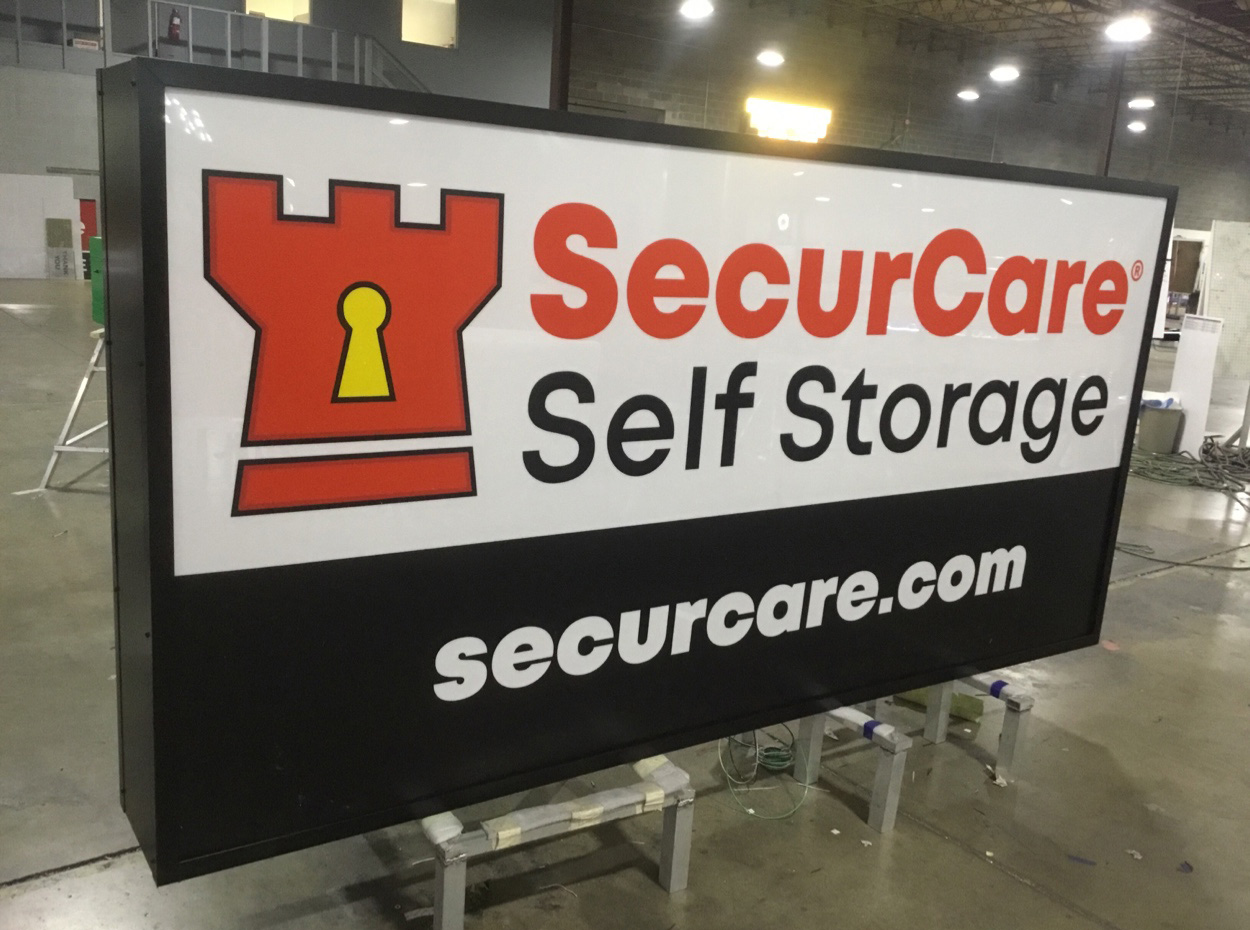
A cabinet sign puts the sign face and illumination inside a single enclosed cabinet. Channel letters are individually fabricated letters or shapes, typically illuminated with LEDs and installed directly to a building or mounted to a raceway.
For sign shops, the practical difference between a cabinet sign and channel letters comes down to the customer’s design, viewing distance, building conditions, budget, and installation requirements. Cabinet signs can put a large amount of information into one highly visible sign structure. Channel letter signage creates an individual-letter appearance that works well when the building itself needs to carry the brand.
Neither product fits every job. Awning Innovations manufactures both, so our team looks at what your customer actually wants and needs rather than trying to force every set of specs into the same fabrication method. We offer four types of sign cabinets as well as five channel letter styles and custom fabrication options.
Channel Letters vs. Cabinet Signs at a Glance
There’s a lot to consider when helping your customer choose the right sign type to represent their business. A lot of those factors center around the fabrication and installation of the sign itself. Here are some key factors:
| Consideration | Channel Letters | Cabinet Signs |
| Construction | Individually fabricated letters or shapes | Enclosed cabinet with a decorated sign face |
| Appearance | Individual dimensional characters | One unified sign area |
| Visibility | Strong building identification and brand visibility | Strong option for roadside and distance viewing |
| Design | Best suited to individual letters, logos, and dimensional brand elements | Accommodates logos, lettering, graphics, and other information on one face |
| Installation | Individual letters or a raceway-mounted assembly must be positioned on the building | Cabinet is installed as a complete sign assembly |
| Individual letters have separate fabricated and electrical components | Components are housed within the cabinet | |
| Common Applications | Storefronts, building elevations, retail centers, branded exterior signage | Building signs, pole signs, pylon applications, roadside identification |
Project specifications can change the cost, installation requirements, and service needs of either option.
How Are Channel Letters Engineered?
Channel letters take a different approach. Each letter, number, logo element, or shape is fabricated as an individual dimensional component. Illumination and mounting specifications are then engineered around the selected letter style and project conditions.
Awning Innovations offers five channel letter styles, with options for customized depth, illumination, and mounting structure. That flexibility allows a sign shop to match the sign more closely to a customer’s brand standards and building architecture.
Engineering matters here. Letter dimensions, mounting method, electrical requirements, illumination, and building conditions all have to work together before fabrication begins.
Awning Innovations creates blueprints for its projects and uses engineered CAD drawings for approval before building to the approved design. Those records also provide useful project information if maintenance or repairs come up years later.
Explore Custom Channel Letters
How Is a Cabinet Sign Built?
A sign cabinet is an enclosed sign structure designed to support and display one or more sign faces. Instead of fabricating every letter as its own dimensional component, the messaging and graphics appear on the cabinet face.
Awning Innovations offers four types of sign cabinets along with fully custom fabrication. Depending on the project, the cabinet provides the structure needed to combine branding, messaging, and illumination into a single sign.
That construction makes cabinets particularly useful when a customer needs a larger visual field. A roadside business, for example, may need its name, logo, and supporting information readable by drivers approaching from a distance. A cabinet gives the sign shop room to work with that information without turning every design element into an individual fabricated letter.
Cabinets can also make sense when existing architecture or mounting conditions favor a contained sign assembly.
Which Option Costs Less: Channel Letters or Cabinet Signs?
There isn’t a universal rule for cabinet-versus-channel-letter pricing, especially when you outsource the project to a wholesale sign fabricator like Awning Innovations. Sign size, materials, illumination, graphics, mounting requirements, electrical work, quantity, and fabrication complexity can all move the final number.
Installation conditions matter, too. A seemingly straightforward sign can become a more involved project once access, mounting surfaces, electrical connections, or structural requirements enter the picture.
Cabinet signs can be a practical choice when the customer needs a substantial illuminated sign area without individually fabricated characters. Channel letters can require more individual fabrication because each character or logo component is built separately.
For sign shops, quoting the actual specifications is more useful than promising that one product category will always be cheaper.
Which Sign Type Offers Better Visibility?
Choosing a sign starts with knowing where people will see it. Cabinet signs are well suited to applications where drivers or pedestrians need to process a larger sign face at a distance. They can support a combination of logos, text, graphics, and other information inside one defined visual area. That can make a cabinet a strong recommendation for roadside properties and freestanding sign structures.
Channel letters work particularly well when the building is the primary identification point. Individual illuminated letters create dimensional separation between the sign and the architecture, making them a common fit for storefronts and branded commercial buildings.
Viewing distance, traffic direction, elevation, surrounding signs, and available mounting area should all factor into the recommendation you give your customer.
How Does Installation Differ Between a Sign’s Face Type?
Cabinet signs and channel letters arrive at installation with different requirements.
A cabinet is a unified assembly. The installer needs an appropriate mounting structure, electrical connection when illuminated, and adequate support for the cabinet’s dimensions and weight.
Channel letters may be installed individually or mounted using another structure, such as a raceway. Individual mounting can require more layout work in the field because letter spacing and alignment have to match the approved design.
Building conditions can settle the decision quickly. Limited mounting space, architectural features, landlord requirements, existing electrical access, or restrictions on penetrations may make one construction method more practical than the other.
Awning Innovations takes customer specifications and turns them into production-ready blueprints, with project details reviewed before fabrication.
What Should Sign Shops Consider About Maintenance?
Serviceability should be part of the product recommendation, especially for illuminated signage.
With a cabinet, lighting and other internal components are contained inside the sign structure. Channel letters distribute components across individual characters or assemblies. The exact maintenance process depends on the sign design, mounting method, illumination system, and access at the installation site.
Documentation becomes particularly useful after the sign has been in service for several years. Awning Innovations maintains blueprints for its projects, giving the team a reference point when future repairs or replacement components are needed.
When Should You Recommend Channel Letters?
Channel letters are usually the stronger recommendation when individual dimensional characters are central to the design. Consider them when:
- Brand standards call for individual letters or logo elements.
- The sign needs to integrate closely with the building architecture.
- A storefront needs prominent illuminated identification.
- Dimensional depth is an important part of the intended appearance.
- The project calls for a particular illumination or mounting style available through channel letter construction.
Channel letters are one of the most common commercial signage formats, and their customization options give sign shops substantial control over the finished appearance.
When Should You Recommend a Cabinet Sign?
Recommend a cabinet sign when the project benefits from a unified sign face, especially when:
- The sign needs to communicate several visual elements in one area.
- Roadside or long-distance visibility is a priority.
- The customer needs an illuminated freestanding or building-mounted sign.
- The architecture works better with a contained sign assembly.
- The design does not require individually fabricated dimensional letters.
- Project specifications or budget make individual letter fabrication less practical.
Cabinets remain a straightforward solution for many traditional commercial sign applications. They also leave room for customization when a standard configuration will not meet the specifications.
What If Your Shop Can Sell the Job But Can’t Build It?
Knowing which product to recommend and having the capacity to fabricate it are two different problems.
A cabinet order may exceed your equipment or floor-space capabilities. A large channel letter package can hit when your production schedule is already full. A specialty configuration may require fabrication experience your team does not use often enough to maintain in-house.
Turning down the order costs more than one job. It can send a customer looking for another sign company that can handle a broader range of work.
Awning Innovations works behind the scenes for sign companies that need additional manufacturing capacity or specialty fabrication capabilities. The company’s role is to design, engineer, fabricate, and deliver the signage while the sign shop maintains its customer relationship. You build the relationship. We’ll build the sign.
Build the Sign the Specs Call For with Awning Innovations
Your customer doesn’t need to know that the job stretches your current production capacity. They need the right sign delivered to spec.
Awning Innovations has spent more than 25 years helping sign professionals take on custom and overflow work. Our wholesale-only team manufactures sign cabinets, channel letters, and other custom signage for sign companies nationwide.
When the next order requires equipment, manpower, or fabrication expertise you’d rather not add in-house, send us the specs. And we’ll deliver a sign up to your standards.
Channel Letters vs. Cabinet Signs FAQ
Are Cabinet Signs Cheaper Than Channel Letters?
Cabinet signs can cost less than channel letters on some projects, but there is no blanket rule. Size, materials, illumination, graphics, mounting, quantity, and installation requirements affect pricing. Channel letters require individual fabrication of letters or shapes, while a cabinet concentrates the sign structure and graphics into one assembly.
Get both options quoted against the actual specifications when budget is driving the decision.
Which Lasts Longer: Channel Letters or Cabinet Signs?
Both cabinet signs and channel letters can provide long service lives when they are properly engineered, fabricated, installed, and maintained. Material specifications, illumination components, weather exposure, installation quality, and maintenance can all influence service life.
The better question is which construction method fits the site and how accessible its components will be for future service.
When Should a Sign Shop Recommend Channel Letters Over a Cabinet Sign?
Recommend channel letters when individual dimensional characters, building integration, or a particular illuminated-letter appearance is central to the design. Site conditions and customer specifications should make the final call.
Recommend a cabinet sign when the customer needs a unified sign face, strong roadside visibility, room for multiple graphic elements, or a sign configuration better suited to an enclosed assembly.