Types of Awnings
Commercial awnings are a functional form of signage that have stood the test of time against newer, innovative signage trends.
As the dominant form of exterior signage for a building, awnings serve both a structural and visual branding purpose for your clients. That’s why it’s important to have the right partner in place to help you and your client select and engineer the right type of awning for a specific site and purpose.
Awning Innovations fabricates a wide range of custom commercial awnings, each built to approved specifications and site requirements, so you can deliver for your customers.
How Customization Is Defined in Each Awning Project
Even when a project falls within a defined awning type, the final build is driven by project-specific requirements, not a preset template.
Dimensions, materials, color and finish, mounting conditions, and structural requirements are all defined before fabrication begins via renderings and drawings reviewed and signed off by your sign company and the client.
As a wholesale-only manufacturer, our role begins once the awning type and overall form are established. From there, we focus on engineering and fabrication. Our team determines how the awning will be built, how it will attach to the structure, and how it will perform under real-world conditions.
That process applies across fabric awnings, metal awnings, and canopy systems alike. Each awning type serves as a structural starting point, allowing the final product to be fabricated accurately to the approved design while accounting for site conditions, codes, and installation requirements.
Our Commercial Awning Offerings
The Awning Innovations process is simple: Your customer comes to you with an order, and you pass it on to our team behind the scenes to keep your capacity balanced and core products prioritized.
We fabricate commercial awnings across a defined range of structural profiles, including:
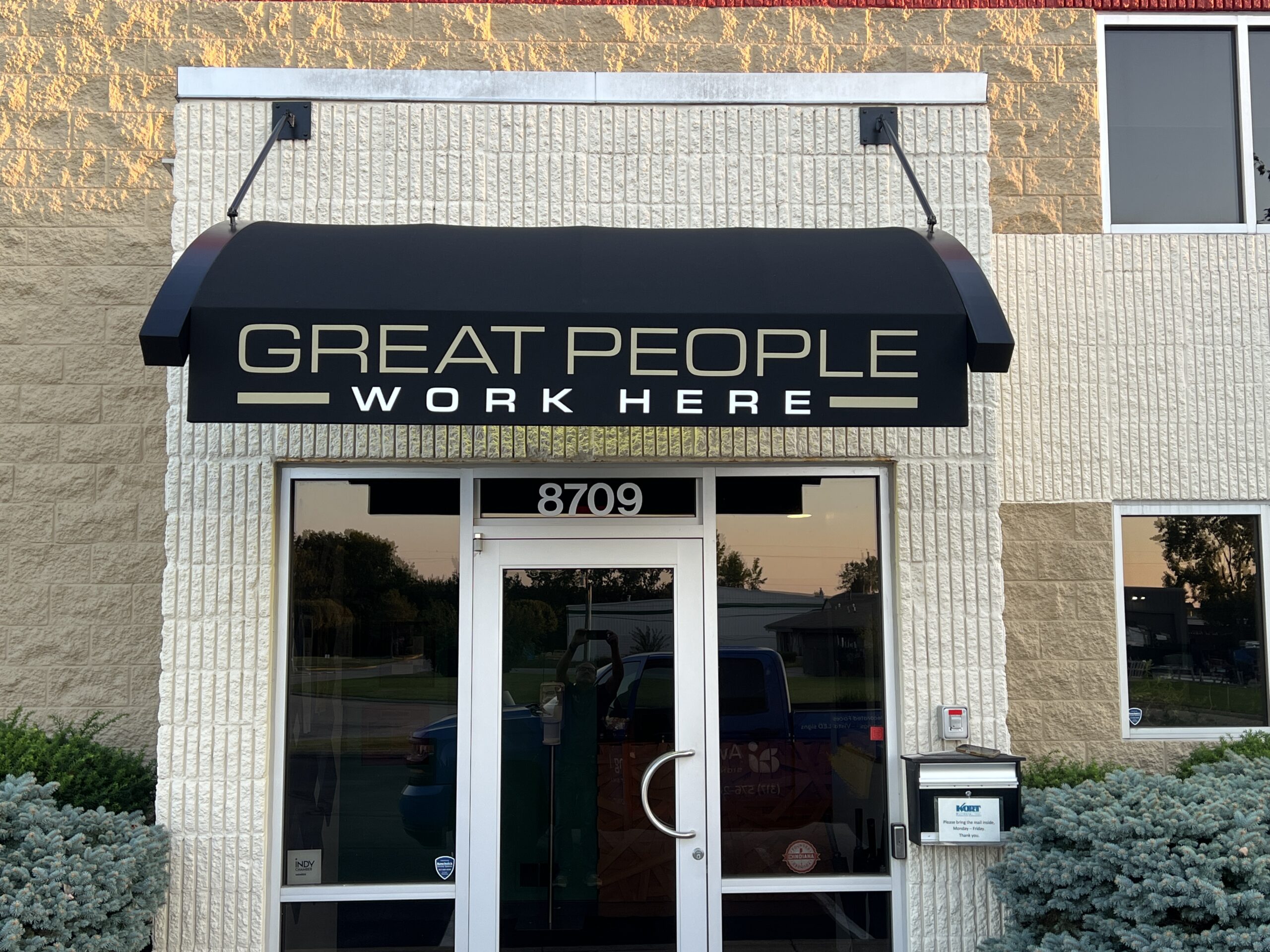
Quarter Barrel Awnings
Quarter barrel awnings offer a curved profile commonly specified for storefronts and primary entrances. This style supports a strong visual presence and works well where projection and curvature are part of the approved design intent. Fabrication accommodates a wide range of dimensions, finishes, and signage applications.
Slant Awnings
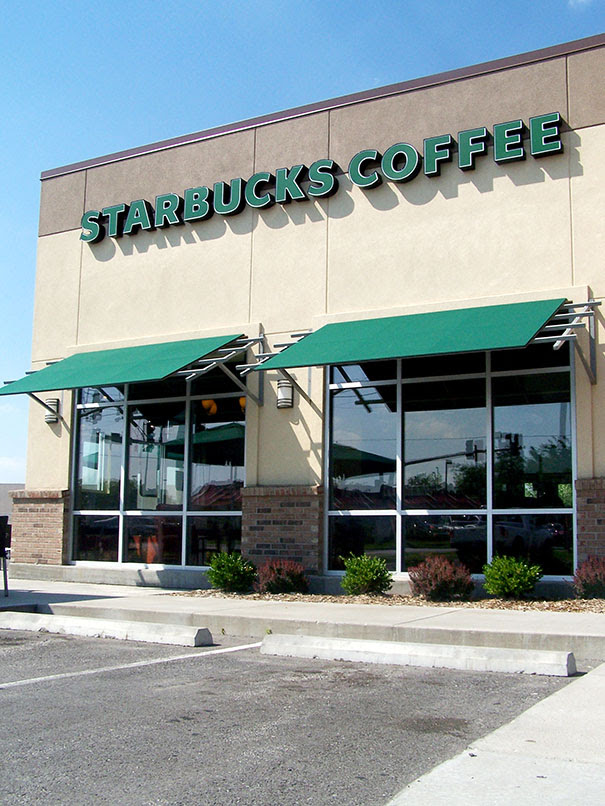
Slant awnings feature a simple, angled profile that adapts easily across retail and multi-tenant environments. They are perfect for customers who want to prioritize graphics or branded faces as part of the signage. Slope, projection, and mounting conditions are defined per project to align with site and code requirements.
Gable Marquee Awnings
Gable marquee awnings incorporate a pitched roof structure and are often specified to complement architectural elements. This offering supports applications where depth and form are required at an entry point, including hospitality and feature entrances.
Waterfall Awnings
Waterfall awnings use a rounded front face that transitions smoothly from the top surface. This profile is commonly selected when a clean, finished appearance is required across the face of the awning, with flexibility for integrated branding.
Shed Awnings
Shed awnings use a single-slope structure that supports larger spans and straightforward mounting. This offering is widely used across commercial facades and can be fabricated to varying projections and lengths based on site conditions.
Marquee Awnings
Marquee awnings are typically centered over entrances and extend outward to define arrival points. These awnings are fabricated to support increased projection and visibility, with structural details tailored to the building and installation environment.
Radius-Ended Waterfall Awnings
Radius-ended waterfall awnings refine the standard waterfall profile by incorporating rounded ends. This offering is often specified for projects requiring a softer edge treatment while maintaining the same general structure.
Hip-Ended Shed Awnings
Hip-ended shed awnings introduce sloped surfaces on multiple sides. This profile is commonly used in exposed locations or where performance in wind and weather is a consideration, with framing adjusted accordingly.
Dome Awnings
Dome awnings provide a fully rounded profile, often specified for primary entrances. We can create a dome profile with a range of diameters and mounting configurations based on the approved design.
Dome Awnings With Sign Panels
Dome awnings with sign panels integrate signage directly into the structure. This offering balances visibility with form, requiring coordination between structural elements and sign placement.
Metal Awnings and Canopies
Metal awnings and canopies are fabricated for projects where durability and long-term performance are priorities. This offering supports a variety of materials, finishes, and structural configurations, particularly in environments where fabric is not specified.
Selecting the Right Type of Commercial Awning
Architecture
From facade conditions to available mounting surfaces, the architecture of a building can narrow the range of viable awning options. What works on one elevation may introduce complications on another.
Permitting & Local Codes
Municipal requirements can influence allowable projection, height, illumination, and overall form. Aligning the awning type with those requirements upfront helps avoid redesigns once drawings are already in review.
Environmental Exposure
Wind loads and local weather patterns all affect which awning types make sense for a given site. The elements in particular can have an effect on the lifespan of the sign if the wrong configuration is chosen.
Installation Conditions
Access for equipment and installer limitations also come into play. When these factors are considered early, fabrication and installation stay aligned with expectations.
Branding & Visibility Goals
Branding still plays an important role. Some awning profiles naturally support graphics or integrated signage better than others. Balancing visual presence with structural practicality is key.
Clear decisions at the start of a project reduce revisions, permitting delays, and field adjustments. For your company, that clarity keeps schedules intact and helps ensure the awning selected performs as intended once it reaches the site.
Start Planning Awning Projects Now
When you’re ready to review scope or move into production planning for your customer’s next commercial awning order, you know who to call. Awning Innovations is ready to put our nearly three decades of awning experience to work for your business. Reach out to our team today to learn more.